This post is also available in other languages:





Content Reuse Policy
You may reproduce or adapt this content for educational or commercial use with proper attribution and a link to: the original blog post Include a visible credit near the reused content with a standard hyperlink to the source.
BMW F30/F31 Headlight Upgrade Guide (2012–2018): Halogen & Xenon to Full LED — LCI Look, Arrow DRL, and Yellow, Amber & Red DRL Options
Dim halogens, aging xenons, or factory LCI LED wanting colour — the complete F30/F31 headlight guide. Identify your factory type, compare the CSL Icon-Style (LCI look) and Arrow-Style (G82 signature), see the yellow, amber and red DRL options, what changes at night, and what happens to leveling and AFS.
Related Products
Related Vehicles
The F30 3 Series is the most common BMW on European roads — and most of them left the factory with halogen headlights that were modest in 2012 and are genuinely poor a decade on. The xenon cars fare better until their corona rings and ballasts start failing; the LCI cars got the good LED units but not the DRL colours everyone wants. This guide covers the whole picture for a 2012–2018 F30 Sedan or F31 Touring: how to identify which factory headlights you have, the two full-LED styles that replace halogen and xenon (the LCI "Icon" look and the current BMW arrow signature), the yellow, amber and red DRL options, what changes at night, what happens to leveling and adaptive functions, and the module route for owners who already have factory LCI LED.
The 60-second version
Three factory headlight types exist on the F30: halogen (pre-LCI and LCI), xenon incl. adaptive AFS (pre-LCI only — the LCI never had xenon), and LCI Icon LED (2016–2018). Halogen and xenon cars can take either full-LED style: the CSL Icon-Style (the LCI look, with White, White/Yellow, White/Yellow/Amber or White/Yellow/Red DRL) or the Arrow-Style (the G82 M4 / current BMW signature, White or White/Yellow). LCI Icon-LED cars take the Arrow-Style — or keep their factory headlights and add switchable White/Yellow DRL modules. Everything is plug-and-play with no coding; xenon cars keep auto-leveling, halogen cars set beam height once at install.
1) Why F30 owners upgrade — halogen, aging xenon, the LCI gap
Halogen: the F30's weakest component
The base F30 headlight is a reflector halogen unit that was never generous, and ten years of lens hazing and reflector aging have taken more from it. The result is the short, yellow-tinted beam that makes dark-road and winter commutes tiring — if your search started with "F30 headlights too dim," this is the car it was written about. Brighter bulbs don't fix hazed optics; a bi-LED projector replaces the whole equation with a wide, white beam and a sharp cutoff.
Xenon: good until the aging starts
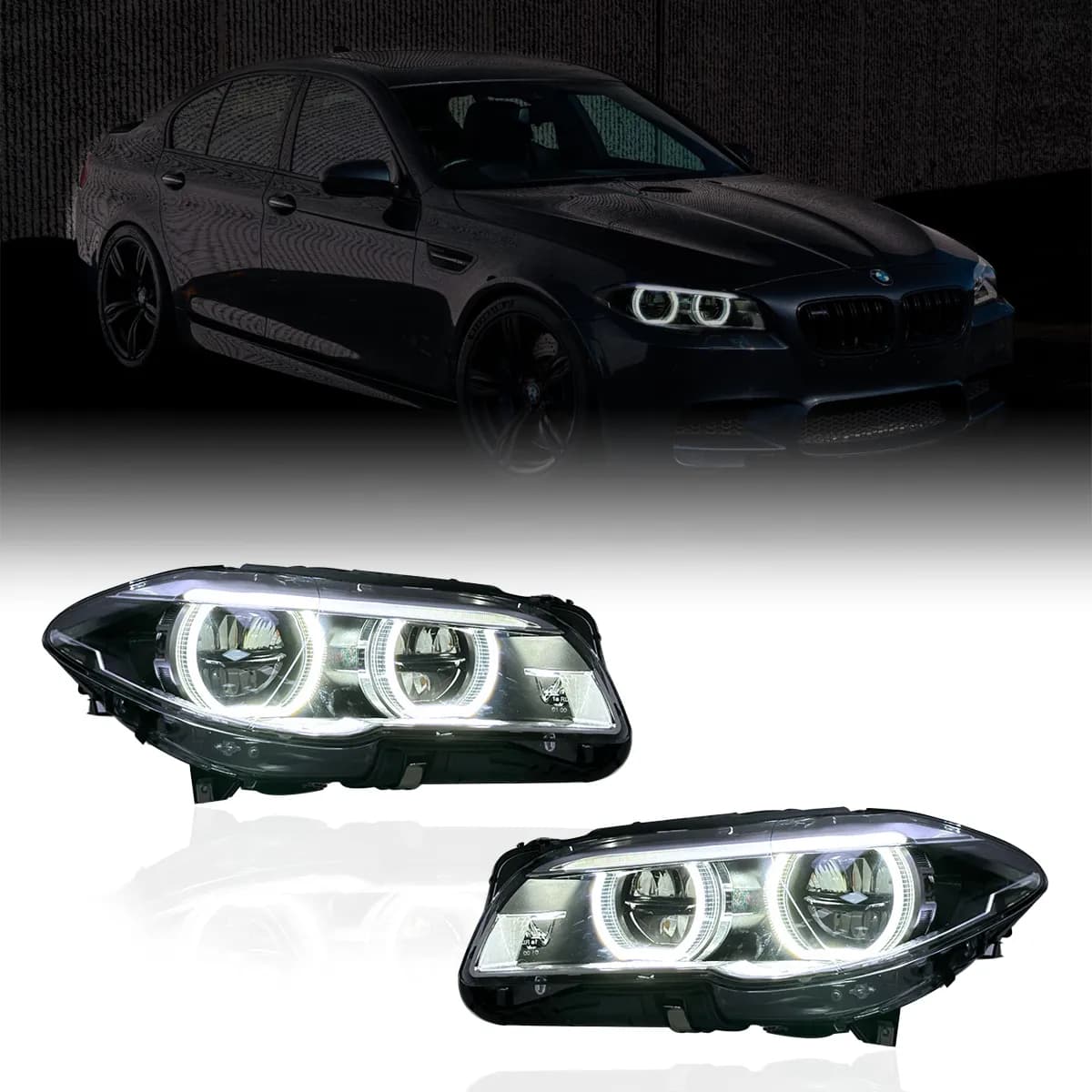
Pre-LCI xenon F30s light well when healthy. The known aging pattern: the LED modules feeding the corona rings weaken in the humid housing — one ring dims or yellows before the other — then ballasts and ignitors join the queue, and condensation (well documented on this platform, factory units included) accelerates all of it. Because BMW doesn't sell the rings separately, official repair means whole assemblies at dealer prices.
The LCI gap
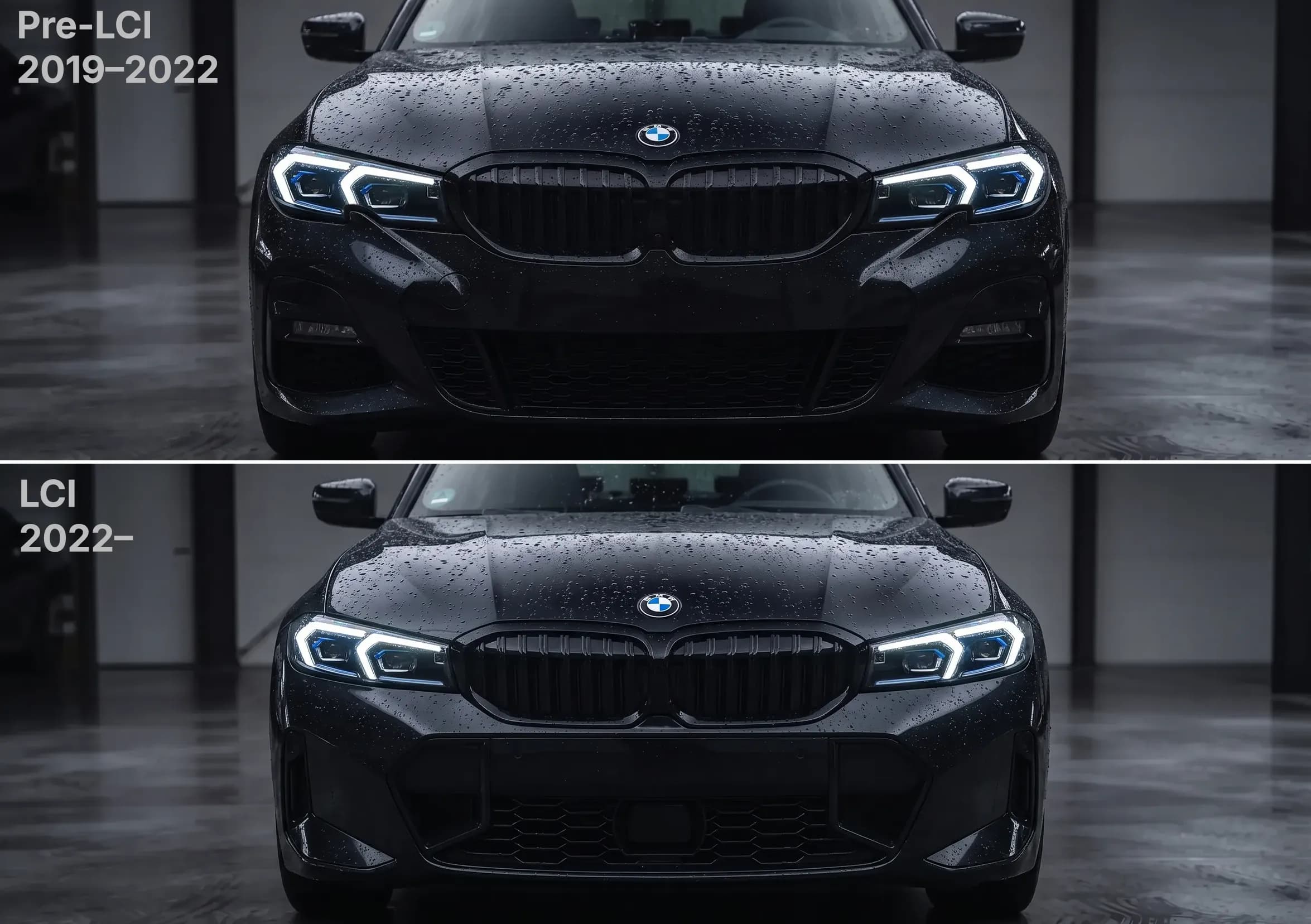
The 2015 facelift gave the F30 the angular "Icon" LED signature that instantly dates every pre-LCI car beside it. Factory LCI LED units can't be bolted into a pre-LCI car without a wiring and coding project — which is exactly the gap the CSL Icon-Style fills: the LCI look, built for the halogen or xenon harness you already have.
A signature the factory never offered
Switchable DRL colours — the CSL yellow, a track-day amber, or red — selected from the high-beam stalk and reversible in seconds. On the most common BMW in the car park, it's the difference between yours and the other five in the row.
2) First: which factory headlights do you have?
Every version of these headlights is built for a specific factory harness, so this is the decision everything else depends on. Three types, and one useful fact: the LCI F30 never had xenon — a 2016–2018 car is halogen or LED.
Halogen · 2012–2018
Reflector bowls, replaceable bulbs, manual beam-height wheel on the dash. Pre-LCI and LCI.
Xenon (522) or Adaptive Xenon (522 + 524) · 2012–2015
Projector lens, LED corona rings, automatic leveling. AFS cars swivel with steering — test with lights in AUTO.
LCI Icon LED (5A2 / 552) · 2016–2018
Angular DRL ring built from LED segments. The CSL Icon-Style does not fit these — section 6 has your two routes.
Not the F34 Gran Turismo — a different housing shape, not supported by either style. Want the option-code method or the two-minute AFS test? Our BMW headlight identification guide, or send us your VIN.
Which one is mine? Tap your situation
Five cases cover nearly every F30 and F31.
Halogen, and I mainly want to see at night
Halogen or xenon, and I want the LCI look
Xenon, and one side has started failing
I want yellow, amber or red DRLs
I already have LCI Icon LED headlights
3) The two styles, compared
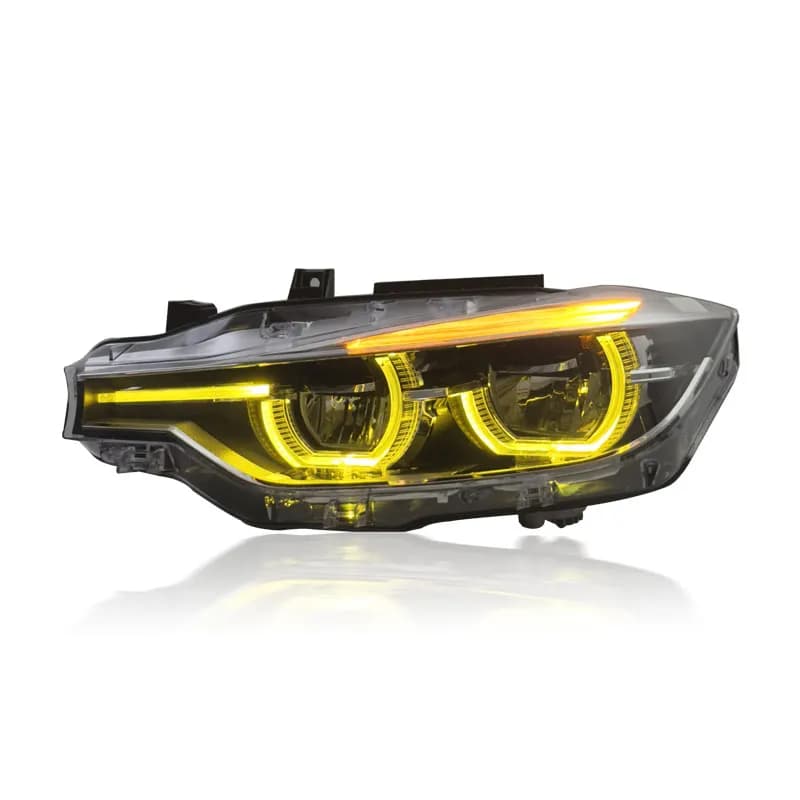
A) CSL Icon-Style (CSL/GTS-style) — the LCI look
The facelift's angular "Icon" signature on a pre-LCI car, with a CSL twist: up to three switchable DRL colours. Bi-LED projector (~6,000 lm), every ballast and driver pre-installed, built for the halogen or xenon harness. The most-reviewed F30 headlight in our range (previously listed as our GTS/CSL-style), and the one halogen owners buy most.
Fits: halogen (2012–2018), xenon incl. AFS (2012–2015). Not LCI LED, not F34.
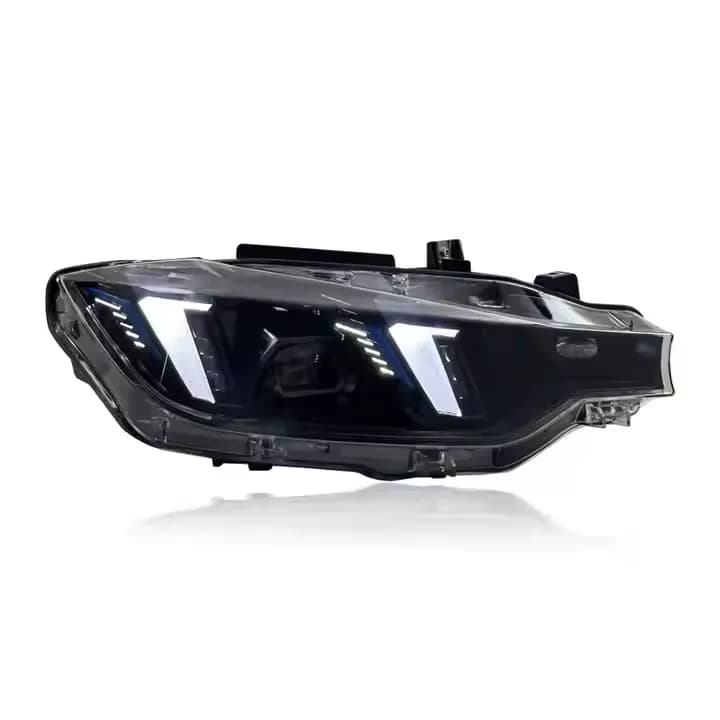
B) Arrow-Style — the current BMW signature
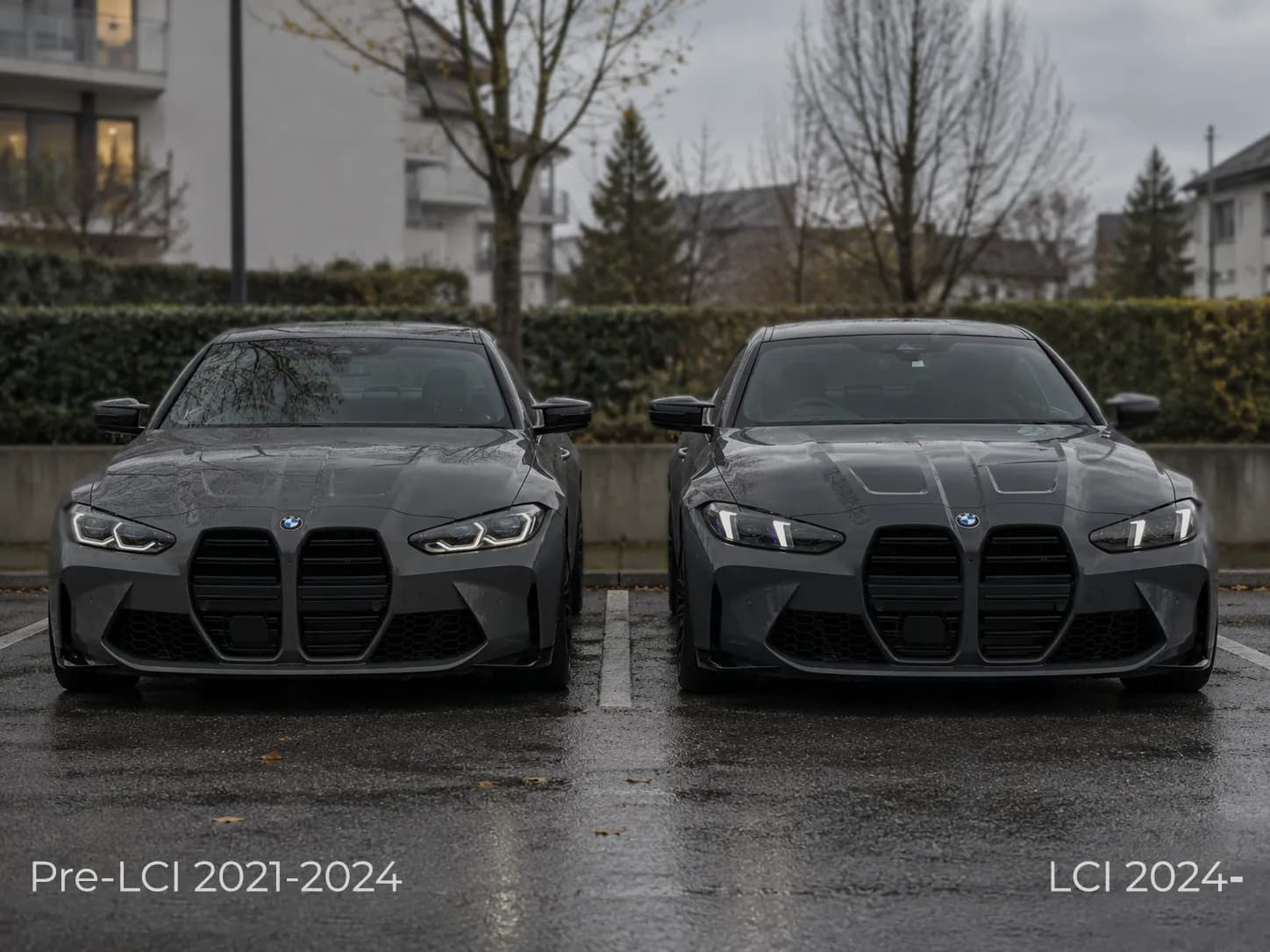
The angular arrow DRL that defines the G82 M4 and the 2024+ lineup, brought to the F30's body lines. Bi-LED projectors, pre-installed electronics, White or switchable White/Yellow DRL — and the only style built in a version for factory LCI Icon LED cars as well as halogen and xenon. Marketed elsewhere as "Snake Eye"; same 2024+ signature.
Fits: halogen (2012–2018), xenon incl. AFS (2012–2015), LCI Icon LED (2016–2018). Not F34.
| CSL Icon-Style | Arrow-Style | |
|---|---|---|
| Reference look | F30 LCI "Icon" signature | G82 M4 / 2024+ BMW arrow |
| Fits halogen | ✓ pre-LCI & LCI | ✓ pre-LCI & LCI |
| Fits xenon / AFS | ✓ | ✓ |
| Fits LCI Icon LED | — (use DRL modules or Arrow-Style) | ✓ |
| DRL options | White · W/Yellow · W/Yellow/Amber · W/Yellow/Red | White · W/Yellow |
| Projector | Bi-LED, ~6,000 lm | Bi-LED, high output |
| Coding | None | None |
| Warranty | 2 years | 2 years |
Both: F30 Sedan and F31 Touring, LHD and RHD, ships complete with nothing to transfer from the old units, sealed housings.
4) What changes at night — and what happens to leveling and AFS
From halogen: the biggest jump on the platform
A single bi-LED module handles low and high beam through a sharp-cutoff projector — a wide, even, white carpet of light instead of the halogen's short yellow patch. The difference is largest exactly where it matters: unlit roads, rain, and the dark half of the year. Beam height on halogen cars is set once, mechanically, at install — the dashboard thumbwheel no longer controls the new units, because factory halogen cars have no leveling system for the LED to talk to. Set it correctly with the wall method and it stays put.
From xenon: instant, and no more ballasts
Full output the instant the lights come on — no xenon warm-up — with a crisper cutoff, and every wear item (ballasts, ignitors, corona-ring modules) retired at once. On brightness, be honest with yourself about what you're comparing against: a xenon burner loses output steadily over the years, so on most 2012–2015 cars the ~6,000 lm bi-LED is a clear step up; against a fresh burner, expect similar reach with a sharper edge. Auto-leveling is retained: the car's ride-height signal still adjusts the beam with load, no leveling faults. On AFS cars the physical swivel is replaced by a fixed, wide bi-LED beam — no coding, no errors, but no moving beam. If cornering swivel is non-negotiable for you, that's an honest line we'd rather draw here than in a support email.
Both styles are configured for the F30's cold and warm bulb checks, so there's no startup flicker and no dashboard warning on either the halogen or xenon harness — see the CANBUS guide for what those checks are.
5) DRL colours: yellow, amber, red — and how switching works
Every switchable version is controlled from the factory high-beam stalk and remembers your selection through ignition cycles. White is the everyday mode; the colours are the signature you select when the setting calls for it — the logic behind switchable DRLs is in our CSL DRL guide.
CSL Icon-Style — switching
- White / Yellow: flash 6× for yellow, 5× back to white.
- White / Yellow / Amber and White / Yellow / Red: 5× white → yellow, 6× yellow → amber or red, 7× back to white.
- White single-colour: fixed.
Arrow-Style — switching
- White / Yellow: flash 5× to toggle.
- White single-colour: fixed.
Red DRLs are the newest corner of the DRL scene and draw the most attention — treat red and amber as the show-and-event signature, run white for daily road use, and use them as intended in line with local expectations.
6) Already have LCI Icon LED? Two routes
Keep the factory headlights — add DRL modules
Your LCI Icon LED is already a good headlight. The switchable White/Yellow DRL modules replace only the DRL segments — six modules (the Icon ring is three segments per side), heatsinks pre-installed, no coding, fully reversible — and add five stalk-controlled modes: manual toggle (3×), an automatic mode that follows your low beams (5×), strobe (7×), breathing (11×), reset (9×). White is matched to the factory colour temperature. Also fits the F80 M3's identical headlight.
Replace them — the Arrow-Style, LCI LED version
If it's the design you want to change, not just the colour: the Arrow-Style is built in a dedicated version for the factory LCI LED harness, bringing the current BMW arrow signature — and switchable White/Yellow — with nothing to transfer and no coding. The CSL Icon-Style isn't offered for LCI LED cars: you already have the Icon look; the modules are the way to colour it.
7) Fitment & OEM numbers
| Your car | CSL Icon-Style | Arrow-Style | DRL modules |
|---|---|---|---|
| Halogen, pre-LCI 2012–2015 | Halogen version | Halogen version | — |
| Halogen, LCI 2016–2018 | Halogen version | Halogen version | — |
| Xenon (522), pre-LCI | Xenon version | Xenon version | — |
| Adaptive Xenon (522 + 524), pre-LCI | Xenon version | Xenon version | — |
| LCI Icon LED 2016–2018 (F30/F31/F35/F80) | — | LED version | ✓ six-piece set |
| F34 Gran Turismo | — | — | — |
Both headlight styles: F30 Sedan and F31 Touring, LHD and RHD, all engines from 316i to 340i. AFS cars order the xenon version — the electronics handle the adaptive harness natively. Approval markings are molded into the lens (the white DRL mode is the everyday configuration) — how to read them is in our E-mark & ECE guide.
OEM part number cross-reference (tap to expand)
Match the number on your headlight's housing sticker to confirm the factory type — and therefore the version to order.
| Factory headlight | OEM part numbers | Version |
|---|---|---|
| Pre-LCI halogen · 2012–2015 | 63117338709 (L) · 63117338710 (R) | Halogen |
| Pre-LCI xenon, non-adaptive · 2012–2015 | 63117338705 (L) · 63117338706 (R) | Xenon |
| Pre-LCI adaptive xenon (AFS) · 2012–2015 | 63117338707 / 63117339385 (L) · 63117338708 / 63117339386 (R) | Xenon |
| LCI halogen · 2016–2018 | 63117365599 (L) · 63117365600 (R) | Halogen |
| LCI Icon LED — DRL module · 2016–2018 | 63117419615 (BMW's number covers three modules, one side) | DRL modules / Arrow LED version |
Number not shown? Send us your VIN. How BMW's 63 11 numbering works is in the identification guide.
8) Install & aiming
Headlights — 2 to 3 hours, bumper off
Show the five steps
- Remove the front bumper: Torx screws along the top, clips on the sides, undertray fasteners; disconnect fog-light and sensor wiring before pulling it forward.
- Unbolt the factory headlights (Torx — typically two on top, one each side) and disconnect the main plug.
- Plug the new headlight into the factory harness — no adapters, no re-pinning.
- Test before reassembly: low, high, indicators, DRL colour switching.
- Refit the bumper; set beam height with the integrated adjusters — halogen cars set it once here, xenon cars confirm the auto-leveling sweep.
Painter's tape on the fender edges before the bumper comes off; a magnetic tray for the screws.
DRL modules — 45 to 90 minutes
Show the steps
- Reach the back of the headlight: turn the wheels outward and pull back the fender liner, or release the bumper for full room.
- Each of the three DRL modules per side is held by T20 Torx screws — back them out, unplug, plug the new module in, refit the screws. Left and right are identical.
- Test all six segments in white and yellow before reassembly.
After any headlight work, aim: ten minutes against a wall with the 1% method. Anything odd afterwards — warnings, flicker — the CANBUS guide's first three checks resolve most cases.
9) Finish the rear: F30 taillights
A modern front with tired factory rears is half a build. Three directions, all plug-and-play for F30 and F80 — the LCI-style (the facelift rear to match the Icon front), the GTS OLED-style, and the CSL laser-style. The full comparison is in our F30/F80 taillights guide.
10) FAQs — F30 / F31 headlight upgrades
Can I upgrade an F30 from halogen straight to full LED?
Do I need coding or resistors?
Does auto-leveling still work? What about the manual dial on halogen cars?
I have Adaptive Xenon (AFS). What do I lose and gain?
Can I get red DRLs on an F30?
Which style gives me the LCI look on a pre-LCI car?
I have factory LCI Icon LED. What are my options?
Will these fit the F31 Touring, the F34 GT, or the F80 M3?
My xenon headlights have condensation and one dim ring. Repair or replace?
Pick your F30's front end
Every pair is configured to your exact car — factory harness, DRL colours, driving side — and bench-tested before shipping, with a 2-year warranty and 14-day free returns. Not sure whether you have halogen, xenon or LCI LED? Send your VIN and we'll confirm.
© Eleron Lights — Lighting built for clean output, tidy fitment, and real-world usability. More articles.