This post is also available in other languages:





Content Reuse Policy
You may reproduce or adapt this content for educational or commercial use with proper attribution and a link to: the original blog post Include a visible credit near the reused content with a standard hyperlink to the source.
BMW CSL Yellow DRLs: The Switchable White/Yellow Module Guide for F22, F30, F32, G20, G22, G30 & M Cars
Most yellow DRL modules lock you into yellow forever — and get you flagged at TÜV and MOT. Here's how switchable white/yellow CSL DRL modules solve it: the legality logic, the five stalk-controlled modes, and every supported BMW from F22 to G30, M cars included.
Yellow daytime running lights are the single most recognizable detail of BMW's modern CS and CSL models — and one of the most requested retrofits in the BMW world. The catch: most aftermarket yellow DRL modules are static yellow, which is exactly what gets owners flagged at TÜV, MOT, and roadside checks across Europe. This guide explains how switchable white/yellow DRL modules solve that problem, how the legality logic actually works, how the five stalk-controlled modes operate, and which BMW models and headlight types are currently supported — F22, F30, F32, G20, G22, and G30, with more platforms on the way.
If you only take one thing from this article: a yellow DRL you can switch back to factory white from the driver's seat is a completely different product from a module that is locked yellow forever.
1) Why yellow DRLs? The CSL story in 60 seconds
Yellow front lighting is old motorsport language. Endurance racing has used yellow lamps for decades to distinguish car classes at night, and French road cars famously ran yellow headlights for most of the 20th century. BMW tapped directly into that heritage when it gave the M4 CSL, M3 CS, M4 CS, and M5 CS their now-iconic yellow daytime running lights — a deliberate nod to BMW's GT race cars.
The look spread fast. Owners of regular 2, 3, 4, and 5 Series cars wanted the same front-end signature without buying a six-figure CS model, and the aftermarket responded with a wave of plug-in yellow DRL boards. Demand is real — but so is a problem most product pages never mention.
2) The problem with static yellow DRL modules
Locked yellow = locked into trouble
The majority of yellow DRL modules on the market are permanently yellow. Once installed, your DRLs are yellow at the school run, yellow at the dealer, yellow at your periodic technical inspection. In much of Europe that's a direct path to a failed TÜV / HU, an advisory or worse at the MOT, and unwanted roadside attention. Owners end up swapping the factory boards back in before every inspection — board-level work, twice a year, forever.
Common quality shortcuts
- Bare LED boards: you separate the OEM board from its heatsink and re-paste it yourself — fiddly, easy to get wrong, bad for LED lifespan.
- Mixed LED bins: left and right modules from different production bins, so one headlight reads warmer than the other.
- No CAN handling: bulb-check errors, dashboard warnings, or DRLs that flicker at idle.
- One color, zero modes: no white option, no automatic behavior, no way back without tools.
3) The white/yellow legality logic (plain language)
Here's the logic that explains why BMW itself can sell an M4 CSL with yellow DRLs while a static aftermarket yellow board causes problems. European lighting rules are strict about the light that illuminates the road: low beam and high beam must stay white. Daytime running lights are a separate signaling function — and the OEM CS/CSL cars run their yellow signature only in that DRL/position-light role, with full ECE type approval behind the whole assembly. The yellow never touches the actual road-illuminating beam.
Aftermarket static modules break that balance in a different way: they remove the white DRL entirely and carry no certification of their own, so inspectors treat the lighting as modified from its approved state. That's why owners of locked-yellow modules report failed inspections — not because yellow light is inherently banned, but because the car can no longer present its approved white configuration.
There's a second layer to this logic worth understanding: what happens when your low beams are on. The regulations' hardest line is road illumination — low and high beam must be white, period. A DRL is a conspicuity signal, not a road-illuminating lamp, and the moment your low beams activate, the DRL stops being your car's primary light source at all. It plays a position-light role next to white beams that already satisfy the illumination requirement. This is precisely how BMW's own CS models keep their yellow signature lit at night: the yellow elements never illuminate the road, so the white-light rule is never touched. The flip side is that daytime is where yellow DRLs draw scrutiny — with low beams off, the yellow DRL is the car's only forward lighting, and that's the configuration inspectors and patrols react to. One honest caveat: BMW's CS cars carry whole-vehicle type approval for their lighting; an aftermarket module doesn't, so treat the low-beams-on reasoning as exactly that — sound logic, not a certificate.
Switchable modules let you act on this logic in whichever direction fits your situation. ELERON's white mode is calibrated to match the factory DRL color temperature, so in white mode the car runs its original lighting appearance for everyday driving — no error codes, no color mismatch against the factory look. Yellow becomes a signature you select when the low beams carry the load, or for shows, meets, and photos — or run Auto mode and let the module handle the transition for you. To be clear about the limits: like any non-certified replacement part, an inspector who identifies non-original components inside the headlight may still raise it, whichever color is showing. Whichever way you use the modules, check your local rules — enforcement varies by country, and staying compliant where you drive is on you.
Want the deeper background on E-marks, ECE regulations, and inspections? Read our E-mark & ECE lighting guide. Independent coverage of the static-module problem and the switchback approach: BMWBlog on ELERON switchback DRLs.
4) Five DRL modes, one stalk — try it below
Every mode is controlled from the factory high-beam stalk with low beams off — no app, no remote, nothing added to your interior. The switching logic lives in a compact control box that sits inline in the headlight harness under the hood (more on that in the install section). Flash the stalk the listed number of times and the module responds. Your selection persists through ignition cycles. Don't take our word for it — flash the stalk yourself:
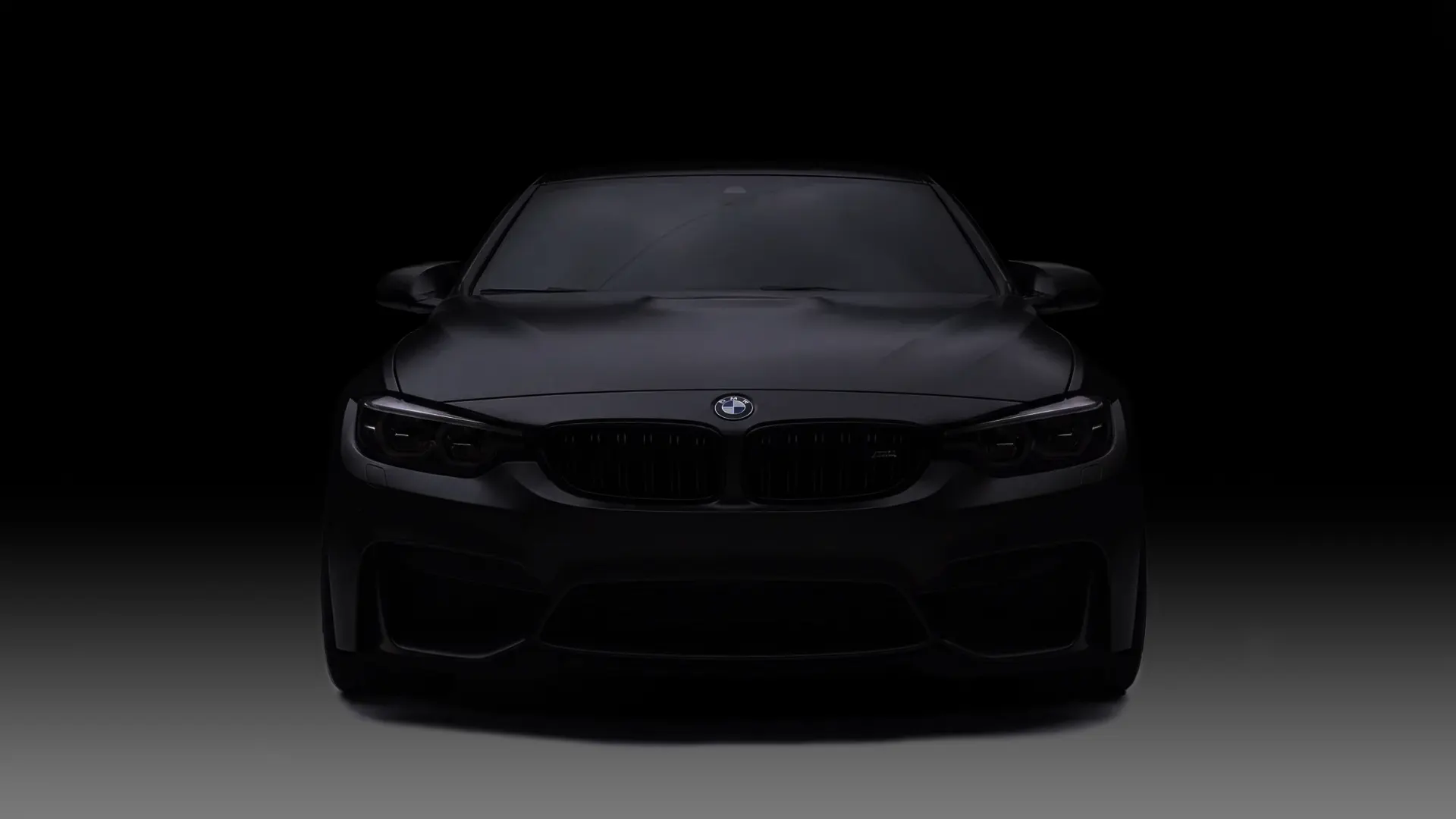
Live Module Demo
Switch the headlights on for the startup sequence, then flash the high beam. Low beams must be off for a mode change — exactly like the real module.
Manual toggle
Switches between solid White and solid Yellow. Stays set until you change it — through ignition cycles too.
Auto mode ELERON exclusive
The DRL follows your low beams — set it once and never touch the toggle again. The same day/night behavior logic as the OEM CSL cars.
Strobe show mode
Left-right progressive strobe in your current color; flash 7× again to strobe the other color. Strictly for a parked car on private ground — flashing forward lights are illegal on public roads in most countries.
Ambient breathing
A slow, subtle pulse — the DRL dims in and out. Best at idle or parked at a meet.
Reset
Returns the module to factory White and clears all mode settings — your undo button.
Why Auto mode matters: most competitor modules — even the few switchable ones — only offer a manual toggle. Auto mode means your car runs the yellow CSL signature in daylight and quietly returns to factory white the moment your low beams activate at dusk, in tunnels, or in rain-sensing situations. It's the closest behavior to how BMW's own CS models manage their yellow signature, and you never have to think about it.
5) Hardware that separates good modules from cheap boards
Complete modules, not bare boards
Every ELERON module ships as a finished assembly: LED board bonded to its own aluminum heatsink with the thermal interface pre-applied. Install is clean mechanical work — unbolt, unplug, swap, bolt. No separating your OEM board from its heatsink, no thermal paste tubes, no board-level surgery. Your factory modules come out untouched and go in a drawer.
Matched pairs, tested before shipping
Left and right modules are color-binned together at QC so both headlights read identical — the mismatched-warmth problem of cheap imports is something you can't un-see once you've noticed it. Each set is configured and bench-tested to your exact car (connector, CAN behavior, EU or US market electronics) before it ships, and carries a 2-year warranty.
6) Fitment: which BMWs are supported
Every module is designed for factory BMW headlights — that's the beauty of the concept. Your original headlights stay in the car, and every factory function stays with them: AFS swiveling, anti-dazzle high-beam assist, laser high-beam, welcome light sequences — all untouched, because only the DRL board is swapped. Every module performs identically — same five modes, same stalk control, same factory-matched white. What changes between versions is the headlight type it's built for: the DRL circuit, connector, and CAN behavior differ between factory headlight options, so you must match the module to the exact headlight in your car, not just the chassis.
The table below covers the platforms this guide is written around; the live BMW DRL catalog is always the up-to-date source for current fitments and new platforms.
| BMW model | Headlight type | Find your module |
|---|---|---|
| 2 Series F22 / F23 & M2 F87 | Factory Icon Adaptive LED | F22/F23 DRL modules |
| 3 Series F30 / F31 / F34 & M3 F80 | Factory Icon Adaptive LED | F3x DRL modules |
| 3 Series G20 / G21 (pre-LCI, 2019–2022) | Factory Laserlight (5AZ) | G20/G21 Laserlight DRL modules |
| 3 Series G20 / G21 (LCI, 2023+) | Factory Laserlight | G20/G21 LCI Laserlight DRL modules |
| 3 Series G20 / G21 | Factory Adaptive LED (552) | G20/G21 Adaptive LED DRL modules |
| 4 Series F32 / F33 / F36 & M4 | Factory Icon Adaptive LED | F32/F33/F36 DRL modules |
| 4 Series G22 / G23 / G26 & M3 G80 / M4 G82 | Factory Adaptive headlights | G22 / G80 / G82 Adaptive DRL modules |
| 4 Series G22 / G23 / G26 (pre-LCI) & M3 G80 / M4 G82 | Factory Laserlight | G22 / G80 / G82 Laserlight DRL modules |
| 5 Series G30 / G31 & M5 F90 | Factory Icon Adaptive LED | G30/G31 DRL modules |
Browse the full catalog at BMW DRL modules, or by series: 2 Series · 3 Series · 4 Series · 5 Series. New platforms land in the catalog first — don't see your car? Tell us what you drive — demand decides what we build next.
Not sure which headlight your G-series has?
- Laserlight (5AZ): blue "L" accents inside the housing, thick horizontal DRL bar, often a "BMW Laser" script on the lens.
- Adaptive LED (552): angular etched DRL ring, beams swivel with steering, no blue accents.
- Standard LED (5A2): same DRL shape as Adaptive but static beams.
Each uses a different DRL circuit and connector. The sticker on your headlight lens carries the BMW part number — or send us your VIN and we'll confirm your exact headlight and market version in under an hour.
7) Install, coding, and reversibility
What the install looks like
- Gain access to the back of the headlight. On G-chassis cars this means removing the front wheel and fender liner (cleanest) or the front bumper (most room). Access on F-chassis cars varies by model.
- Disconnect the factory DRL connector, unbolt the OEM module, and bolt the ELERON module in its place with the original screws — same mounting points.
- Seat the control box inline in the headlight harness: the car-side harness connector plugs into the box, and the box plugs into the headlight — factory male/female connectors on both sides, so nothing is cut or spliced. This box is what reads your high-beam stalk flashes.
- Stick the box anywhere convenient in the engine bay with the supplied double-sided tape, away from direct exhaust-manifold heat.
- Test White and Yellow, plus Auto mode, before closing up.
Typical time: 1.5–2 hours with basic hand tools (T20/T25 Torx, 8/10mm sockets, trim tool). A shop will quote 1–2 hours of labor.
Zero coding, fully reversible
- No coding, no cutting: the modules draw the same current and speak the same CAN signals as the factory DRL — no dashboard warnings, welcome light preserved. The inline control box uses factory connectors on both sides, so the harness is never cut or spliced.
- Why the box exists: the stalk-switching logic has to live somewhere, and putting it inside the headlight would mean baking the housing open. The inline box is what keeps this a bolt-and-plug install. (Our complete headlight units carry the logic built in — no box needed there.)
- OEM hardware stays OEM: your factory modules come out intact. Bolt them back in for a lease return, sale, or dealer visit — same screws, no residue.
- Factory functions untouched: the DRL is a separate circuit. AFS swiveling, anti-dazzle high-beam assist, laser high-beam, and welcome light sequences all work exactly as BMW designed.
8) FAQs — BMW CSL yellow DRL modules
Are yellow DRLs legal on the road?
How do regulations treat DRLs differently from low beams?
What's the difference between a static and a switchable yellow DRL module?
Do BMW DRL modules require coding?
Which BMW models can get the CSL yellow DRL look?
How do I switch the DRL color while driving?
Will the modules affect my Laserlight or adaptive headlight functions?
Is the upgrade reversible for a lease return or resale?
Ready for the CSL signature — without giving up white?
Every set is configured and bench-tested to your exact car before it ships, covered by a 2-year warranty and 14-day free returns. Not sure which headlight you have? Send us your VIN and we'll confirm in under an hour.
© Eleron Lights — Lighting built for clean output, tidy fitment, and real-world usability. More articles.