This post is also available in other languages:







Content Reuse Policy
You may reproduce or adapt this content for educational or commercial use with proper attribution and a link to: the original blog post Include a visible credit near the reused content with a standard hyperlink to the source.
What Headlights Does My BMW Have? Option Codes (5A2, 552, 5AZ), VIN Check & Visual ID for F & G Chassis
Halogen, xenon, LED, Adaptive LED, or Laserlight? Four reliable ways to identify your BMW's exact headlights — VIN option codes, the housing sticker, visual tells per chassis, and two-minute driveway tests — plus what your answer means for parts and upgrades.
Before you buy replacement parts, a DRL module, or upgrade headlights — before you even ask a question on a forum — you need to know exactly which headlights your BMW has. Halogen, xenon, LED, Adaptive LED, or Laserlight: the same chassis can carry several of them, they use different connectors and electronics, and they are easy to confuse from the outside. This guide gives you four reliable ways to identify your headlights: the option codes (VIN check), the sticker on the headlight itself, visual identification for every F and G chassis, and simple behavior tests you can do in your driveway.
The 60-second answer
The fastest way to find out which headlights your BMW has is to decode your VIN with a free online BMW VIN decoder and read the lighting option codes: 522 = Xenon, 522 + 524 = Adaptive Xenon, 5A2 = LED headlights (non-adaptive), 552 = Adaptive Full LED ("Icon" light), 5AZ = Adaptive LED with Laserlight. No lighting code usually means halogen base headlights. If you can't decode the VIN, check the sticker on the headlight housing or use the visual guide below.
1) Why your headlight type matters
"What headlights do I have?" sounds like a trivia question. It isn't. The answer decides real money and real fitment:
- Replacement parts: xenon, LED, and adaptive units use different connectors, modules, and ballasts. Order for the wrong type and nothing plugs in. Our pin guide shows how the same-looking connector hides 6, 8, 9, or 10 populated pins.
- Upgrades and modules: a DRL module for a Laserlight headlight will not work in an Adaptive LED headlight on the same car. The DRL circuits are different.
- Coding and diagnostics: adaptive systems (AFS/AHL, Selective Beam) need the car to expect them. Swapping types without knowing what you have causes errors — see our CANBUS & error guide.
- Buying a used BMW: option codes tell you if the car really has the lighting the listing claims. Laserlight and Adaptive LED add real value; a mislabeled listing costs you exactly that value.
- Inspections: the E-mark and function codes on your lens must match the installed technology — our E-mark guide explains how to read them.
2) Method 1 — Decode your VIN (the definitive answer)
Every BMW leaves the factory with a vehicle order (VO): the full list of option codes (also called SA codes) the car was built with. The lighting codes in that list are the ground truth — more reliable than any visual check, because they cannot be confused by aftermarket parts or retrofits done by a previous owner.
- Find your 17-character VIN: base of the windshield, driver's door jamb sticker, or your registration document.
- Enter the last 7 characters into a free BMW VIN decoder such as bimmer.work.
- Scroll the equipment list and look for the lighting codes from the table below (522, 524, 5A2, 552, 5AZ, 5AC).
- No lighting option code at all? Your car left the factory with the base halogen headlights.
One caveat: the VO shows what the car was built with. If a previous owner retrofitted different headlights, the codes and the car may disagree. That's why we always confirm with a second method — the sticker or the visual check — before shipping parts.
3) BMW lighting option codes — the master table
| Code | BMW name | What it actually means |
|---|---|---|
| — | Halogen headlights | Base equipment, usually no dedicated code. Replaceable H7-type bulbs, reflector or simple projector optics. |
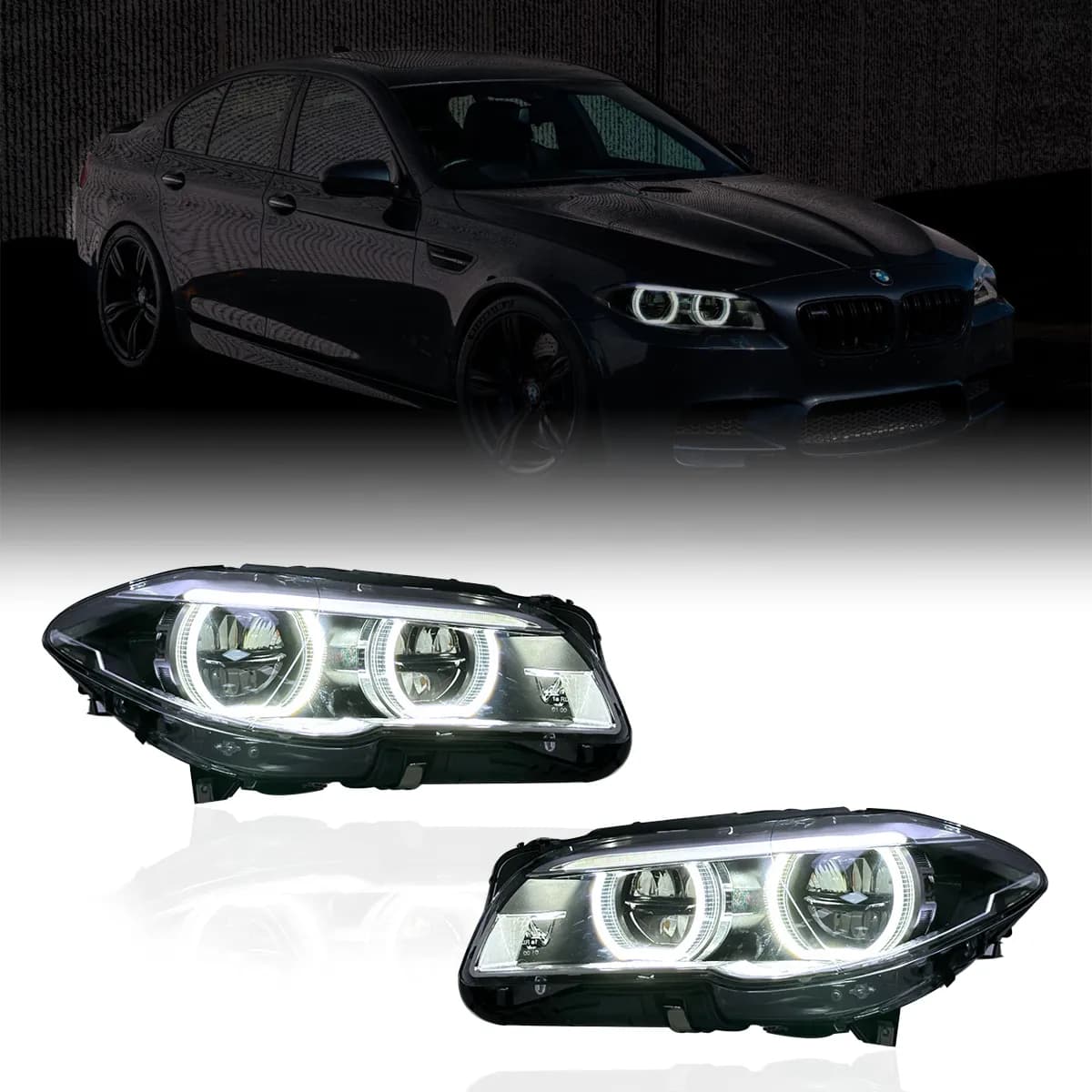
| 522 | Xenon light | Bi-xenon projectors with D1S/D2S burners and ballasts. LED corona rings as DRL on most F-chassis cars. |
| 524 | Adaptive light control | Adds swiveling (AHL/AFS) to xenon headlights. Always appears together with 522. Uses a different connector than plain 522 — this is the classic 8-pin vs 9-pin difference. |
| 5A2 | LED headlights | Full LED low and high beam, non-adaptive: the beams do not swivel. Visually very close to 552 on many models — the codes or a behavior test tell them apart. |
| 552 | Adaptive Full LED ("Icon" light) | Full LED with swiveling, variable beam distribution, cornering light, and — combined with 5AC — anti-dazzle Selective Beam. The "Icon Adaptive LED" of the F-chassis LCI era and G30. |
| 5AZ | Adaptive LED with Laserlight | Adaptive LED plus a laser high-beam booster for extended range. Recognizable by blue inlays and "BMW Laser" lettering in the housing. |
| 5AC | High-beam Assistant | Camera-controlled automatic high beam. Not a headlight type by itself, but required for Selective Beam on 552 cars. |
| 5A1 | LED fog lights | Front LED fog lamps. Listed here so you don't mistake it for a headlight code — it isn't one. |
Exact option availability differs by model year and market — some markets bundle lighting into packages, and a few chassis use additional market-specific variants. When a code and the car disagree, trust the car and count the pins.
4) Method 2 — The sticker on the headlight itself
Every BMW headlight carries a factory label on the housing — usually on the top or back of the unit, visible once you open the hood. It lists the BMW part number, the supplier, and often the technology name. This method beats the VIN check on one point: it identifies what is physically installed today, retrofits included.
How to read the number
BMW part numbers follow the catalog numbering scheme. The full 11-digit number splits into three parts — for example 63 11 9 481 708:
| Segment | Example | Meaning |
|---|---|---|
| Main group | 63 | Lighting — every lamp on the car lives in group 63. |
| Subgroup | 11 | Headlights. (Taillights and other lamps use different subgroups within group 63.) |
| Part number | 9 481 708 | The 7-digit number identifying the exact headlight variant — this is what's actually stamped on the label, and what you search for. |
Enter the 7-digit part number into a parts catalog (realoem-style databases) and it resolves to the exact headlight variant — left or right, market version, and whether it's the adaptive or Laserlight unit. The label often only shows the 7 digits; that's normal, the 63 11 prefix is implied by what the part is.
While you're there, check the lens markings too — the E-mark and function letters confirm the approved technology. Full decoding walkthrough in our E-mark & ECE lighting guide.
5) Method 3 — Visual identification, chassis by chassis
No VIN at hand — say, you're looking at a used-car listing? These are the visual tells for every popular F and G chassis. One universal rule first: visible replaceable bulbs and simple reflector bowls = halogen; projector lenses with glowing corona rings = xenon; light-guide tubes or etched light blades = LED. Then the details per platform.
2 Series F22 / F23 (2014–2021)
- Halogen (base): twin round rings with visible bulb reflectors, orange side reflector, no projector lens.
- Xenon (522): glowing white corona rings around clear projectors.
- LCI LED / Adaptive LED (2017+): hexagonal "icon"-style light tubes instead of round rings — flat-bottomed, sharply drawn.
3 Series F30 / F31 / F34 (2012–2019)
- Pre-LCI halogen (2012–2015): round double rings, visible bulbs, amber-tinted corner.
- Pre-LCI xenon (522): LED corona rings, projector lenses, "eyebrow" LED accent on top. Add 524 and the projectors swivel — visually near-identical, so check codes or behavior.
- LCI (2015–2019) LED (5A2) and Adaptive LED (552): hexagonal full-LED tubes reaching the kidney grille. 5A2 and 552 look almost the same from outside — the giveaway is the cornering-light module and swiveling behavior of 552.
Considering an upgrade from halogen or xenon? See our F30/F31 headlights guide.
4 Series F32 / F33 / F36 + M3 F80 / M4 F82 (2013–2020)
- Pre-LCI (2013–2017): xenon standard in most markets (522) with LED corona rings; 524 adds swiveling.
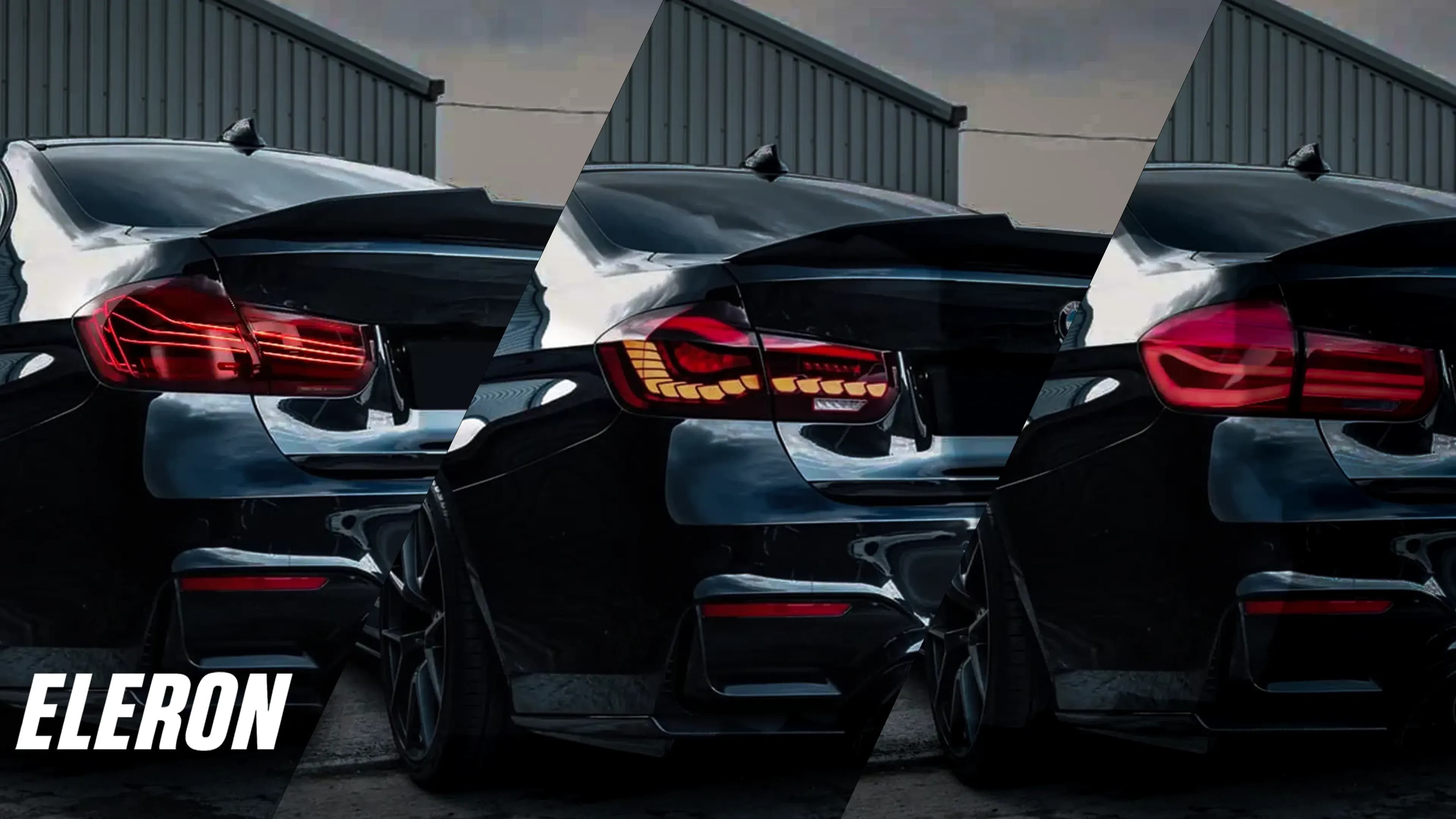
- LCI (2017–2020): full-LED with hexagonal "icon" tubes; adaptive version (552) swivels and corners.
- The connector is the trap on this platform: same shell, 6 / 8 / 9 / 10 populated pins depending on version. Full breakdown with photos in our F32–F36 / F80–F83 pin guide.
3 Series G20 / G21 + M3 G80 (2019+)
- Standard LED: full-LED with the inverted-L light blades; no blue elements, beams do not swivel.
- Adaptive LED (552): same family look with matrix/adaptive internals; beams swivel and mask oncoming traffic.
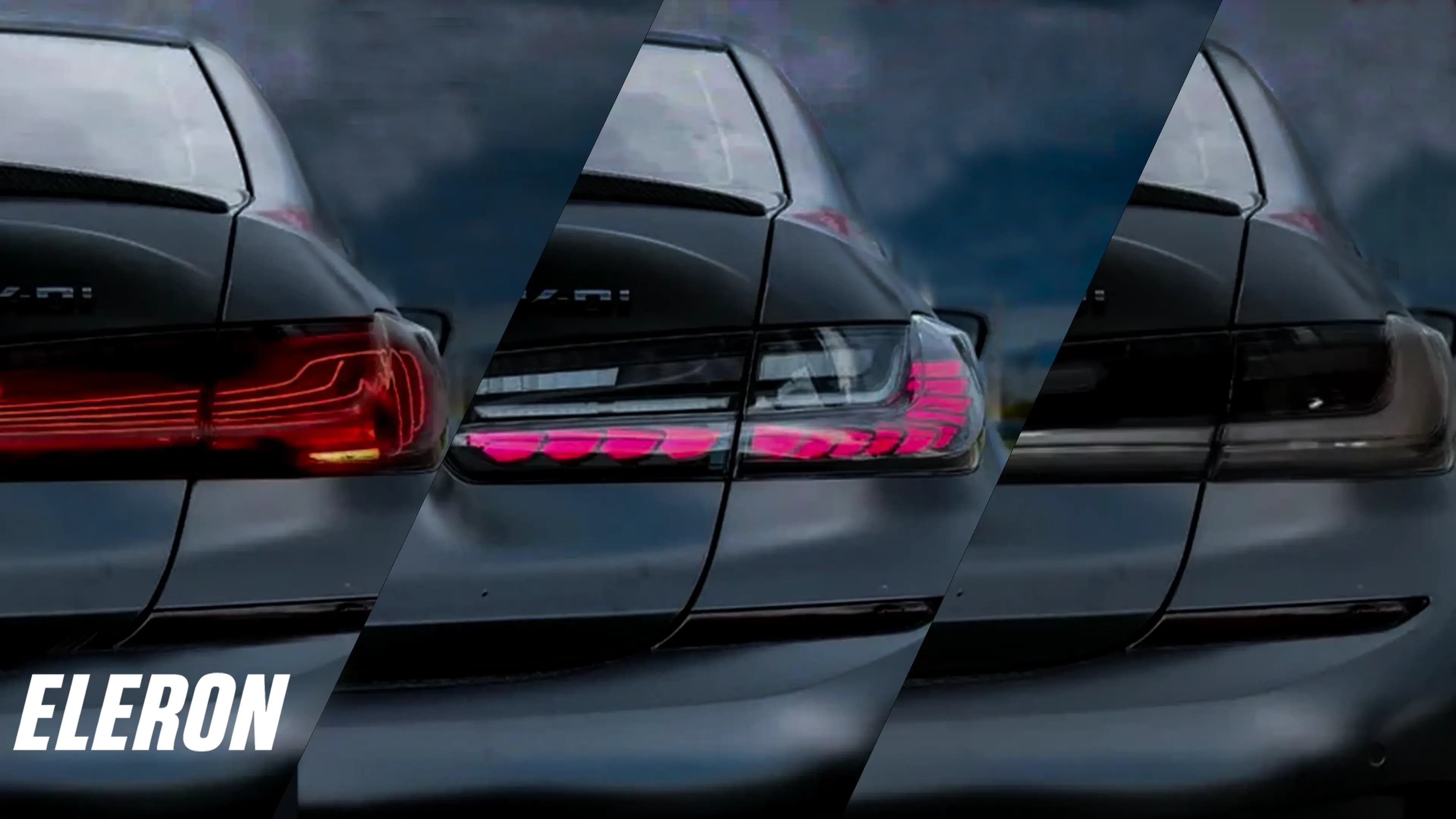
- Laserlight (5AZ): the unmistakable one — blue "L"-shaped inlays inside the housing and "BMW Laser" lettering on the lens area. Pre-LCI (2019–2022) and LCI (2022+) versions have different internals and different DRL circuits.
Full platform breakdown: G20/G21 headlights guide.
4 Series G22 / G23 / G26 + M4 G82 (2020+)
- Standard / Adaptive LED: slim housings with angular twin light blades; adaptive version swivels and masks.
- Laserlight (5AZ, pre-LCI): blue accents and "BMW Laser" marking, laser high-beam booster.
- LCI (2024+): new-generation adaptive LED with revised, arrow-like DRL graphics.
5 Series G30 / G31 (2017–2023)
- LED (5A2, standard): full-LED twin blades; no cornering module in the lower inner corner.
- Adaptive Full LED "Icon" (552): the same family look plus cornering-light module, swiveling, and Selective Beam (with 5AC). This is the visually subtle pair — codes or the startup test settle it.
- LCI (2020+): slimmer adaptive LED standard; Laserlight optional in some markets — look for the blue elements.
6) Method 4 — Behavior tests in your driveway
When two versions look identical from outside — 5A2 vs 552 is the classic case — the headlights will still tell you what they are by how they behave. Three tests, two minutes, no tools:
The startup sweep
Start the car with lights in Auto and watch the projectors. Adaptive units perform a visible self-check — the beams sweep or the leveling motors cycle. Non-adaptive units only level vertically, without the sideways sweep.
The steering test
At night, low beams on, turn the wheel while rolling slowly. Adaptive beams follow the steering; on many cars an extra cornering light fills the inside of the turn at low speed. Static beams don't move.
The menu check
Open iDrive → vehicle/light settings. If you find anti-dazzle high-beam assistant options, the car has the matrix-capable hardware (552-family or Laserlight). Base LED cars only show simple high-beam assist, if anything.
Laserlight bonus tell: the laser booster only engages at higher speeds with high beam active — you'll notice the throw visibly extending on an open road. And the blue inlays are visible even parked.
7) What your headlight type means for upgrades
Now the practical part: what you found determines what you can do with it. Two very different paths exist, and knowing your headlight type tells you which one applies.
You have halogen or xenon (F-chassis)
Your upgrade path is a complete headlight upgrade — modern full-LED units built for your exact connector. This is where the pin count from the codes matters: 522 alone is typically 8-pin, 522+524 is 9-pin. Start with the guide for your platform: F30/F31 · F32/F33/F36 + F80/F82/F83.
You have Icon Adaptive LED, Adaptive LED, or Laserlight
Your factory headlights are already excellent — the upgrade path is inside them. Switchable white/yellow CSL DRL modules replace only the DRL board: factory-matched white for daily driving, CSL yellow on demand, all adaptive/laser functions untouched, no coding. The module must match your exact headlight version — which is precisely what this guide helped you determine.
| Your identified headlight | Your upgrade path |
|---|---|
| F22/F23 Icon Adaptive LED | F22/F23 CSL DRL modules |
| F30/F31/F34 Icon Adaptive LED | F3x CSL DRL modules |
| F30/F31 halogen or xenon | Full LED headlight upgrade |
| F32/F33/F36 Icon Adaptive LED | F32/F33/F36 CSL DRL modules |
| F32/F33/F36 xenon | Full LED headlight upgrade (pin guide) |
| G20/G21 Laserlight — pre-LCI (5AZ) | G20/G21 Laserlight CSL DRL modules |
| G20/G21 Laserlight — LCI | G20/G21 LCI CSL DRL modules |
| G20/G21 Adaptive LED (552) | G20/G21 Adaptive LED CSL DRL modules |
| G22/G23/G26 Adaptive LED | G22/G23/G26 CSL DRL modules |
| G22/G23/G26 Laserlight — pre-LCI (5AZ) | G22 Laserlight CSL DRL modules |
| G30/G31 Icon Adaptive LED (552) | G30/G31 CSL DRL modules |
New here? The full story on switchable white/yellow DRL modules — legality logic, five stalk-controlled modes, install — is in our CSL DRL modules guide. After any headlight work, finish with correct aiming.
8) FAQs — identifying BMW headlights
How do I find my BMW's option codes?
What is the difference between BMW option 5A2 and 552?
How do I know if my BMW has Laserlight?
What does the number on my BMW headlight mean?
My VIN says one thing but the headlights look different. Which is right?
Do all G20 3 Series have laser headlights?
Why does my headlight type matter when ordering parts or modules?
Still not 100% sure what you have?
Send us your VIN — or a photo of your headlight and its housing sticker — and we'll identify your exact headlight version and confirm which parts and modules fit. Usually within the hour.
© Eleron Lights — Lighting built for clean output, tidy fitment, and real-world usability. More articles.